
Hormonal Balance • PCOS • Women's Health
Vitamins for PCOS and Insulin Resistance: What Really Matters?
Vitamins for PCOS are one of the most searched topics among women struggling with insulin resistance, irregular periods, fatigue, and difficulty losing weight. If you're wondering which supplements are really worth it and which are backed by science, this article is for you.
Polycystic ovary syndrome (PCOS) is one of the most common endocrine conditions in women of reproductive age. In recent years, more and more specialists have drawn attention to the fact that the condition affects not only the ovaries, but also the entire metabolic and hormonal balance.
It is no coincidence that in 2025 an international panel of specialists proposed a new name – PMOS (Polyendocrine Metabolic Ovarian Syndrome), which better reflects the complex nature of the condition.
If you live with PCOS and insulin resistance, you've probably wondered:
„"Which vitamins and supplements are really worth it?"“
The truth is, not every woman with PCOS needs the same supplements. But there are a few nutrients for which science shows particularly promising results.
Why are deficiencies so common in PCOS?
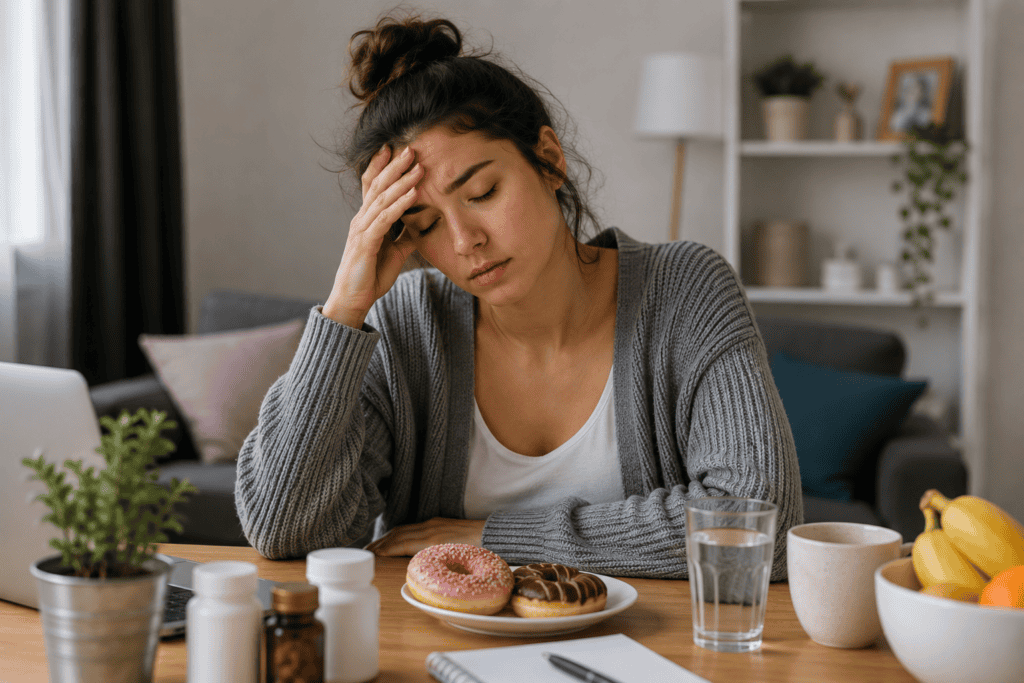
PCOS often goes hand in hand with:
- insulin resistance
- chronic inflammation
- disorders in the intestinal microbiome
- increased oxidative stress
- more difficult absorption of certain vitamins and minerals
Therefore, many women experience symptoms such as:
- constant fatigue
- craving for sweets
- brain fog
- hair loss
- difficulty losing weight
- irregular cycle
even when they are eating relatively well.
Inositol – one of the best-studied ingredients for PCOS
What is it?
Inositol is a vitamin-like substance that plays a key role in insulin signaling and ovarian function.
Scientific publications show that the combination of Myo-Inositol + D-Chiro-Inositol can help:
more regular ovulation
improved insulin sensitivity
better hormonal balance
better egg quality
1 of 10
women of reproductive age have PCOS
70%
of cases remain undiagnosed
80%
of women with PCOS have insulin resistance
Vitamin B12 – the often underestimated deficiency
It is especially important for women who are taking or have taken metformin.
Studies show that long-term use of metformin may be associated with decreased vitamin B12 levels.
The deficiency can manifest as:
fatigue
lack of concentration
weakness
hair loss
mood swings
Folate (Vitamin B9)
Vitamin D deficiency is extremely common in women with PCOS.
Lower levels are associated with:
higher insulin resistance
worse metabolic profile
ovulation disorders
higher inflammatory markers
This is why testing for 25(OH) Vitamin D is often among the first laboratory tests that specialists recommend.
Vitamin D
It is especially important for women who are taking or have taken metformin.
Studies show that long-term use of metformin may be associated with decreased vitamin B12 levels.
The deficiency can manifest as:
fatigue
lack of concentration
weakness
hair loss
mood swings
Berberine – a natural ally for insulin sensitivity
Berberine is a plant compound extracted from plants such as Berberis aristata.
Over the past decade, it has attracted significant scientific interest due to its potential to aid in:
insulin sensitivity
glucose metabolism
appetite control
lipid profile
Some studies even compare its effects to those of metformin in certain indicators, although it cannot be considered as its substitute.
What should I look for in a PCOS supplement?
After years of reading scientific publications and talking to women with PCOS, I have come to the conclusion that the most meaningful formulas are those that combine several well-researched ingredients rather than relying on just one.
That's why we created a formula that includes:
✔ Myo-Inositol
✔ D-Chiro-Inositol
✔ Vitamin B12
✔ Folic acid
✔ Berberine
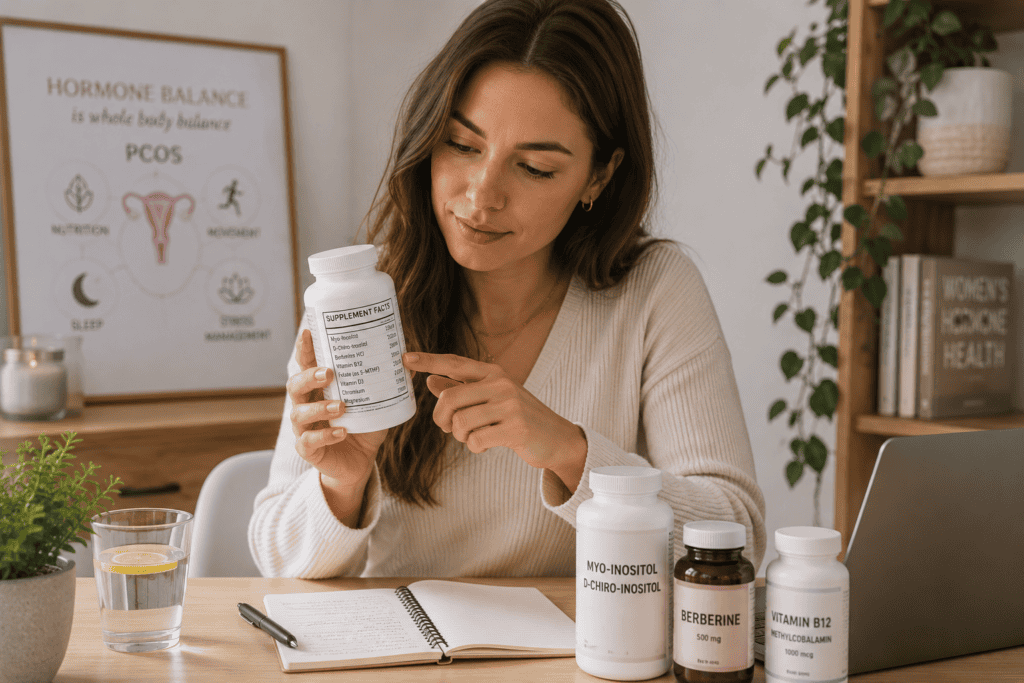
A combination aimed at some of the most common challenges in PCOS and insulin resistance. If you want to take a closer look at the product and its ingredients
Most importantly: research first, supplements later
One of the most common mistakes is to start 5–6 different supplements at the same time.
The more sensible approach is:
- Research
- Deficit analysis
- Consultation with a specialist
- Targeted supplementation
The truth that no one tells you
PCOS (or PMOS, as it is increasingly being called) is much more than just an ovarian problem.
It affects hormones, metabolism, insulin, inflammation, and even the gut microbiome.
Vitamins and supplements are not a magic solution, but when chosen correctly and tailored to individual needs, they can be a valuable part of an overall strategy for better hormonal balance and quality of life.